

Singapore architecture stands out with its innovative buildings that push the boundaries of architecture and combine nature and modernity. In this article, we will take an in-depth look at the architectural features of the most famous and iconic buildings in Singapore.
After being under British rule for many years, Singapore gained its independence in 1965 and rapidly developed into one of the world’s most important financial and commercial centers. Planned as a “Garden City” in 1967, Singapore has successfully realized this goal by attaching great importance to green areas along with high-rise commercial buildings.
Singapore, however, is not content with just large parks and gardens; it has shown how technology and nature can coexist in harmony, and even more powerfully, with gardens extending all over the city, even to the tops of skyscrapers. For nearly sixty years, urban planners have encouraged practices such as green roofs and vertical gardens, mandating sustainable solutions such as vegetation conservation and solar energy.

Now, are you ready to explore Singapore architecture through the most famous and iconic buildings in Singapore? 🙂
Famous & Iconic Buildings in Singapore
1. Marina Bay Sands: A Wonder of Architecture and Engineering

Architecture: Designed by Moshe Safdie, Marina Bay Sands is a massive complex of buildings that redefines Singapore’s skyline. The 340-meter-long SkyPark, stretching in the form of a ship above three 55-story skyscrapers, is the most striking feature of the building.
Engineering: SkyPark combines a pool, garden and observation platform. This engineering marvel stands on top of the skyscrapers, supported by a massive steel truss system.
2. Gardens by the Bay: Biomimicry and Sustainable Design

Architecture: Designed by the British architecture firm Grant Associates, Gardens by the Bay is characterized by a design inspired by nature and based on biomimicry. Supertrees and bioclimatic greenhouses show how modern architecture can be harmonized with nature.
Sustainability: The greenhouses are equipped with environmentally friendly technologies such as energy-saving systems and natural ventilation. They are also integrated with sustainable solutions such as Supertrees, solar panels and rainwater harvesting systems.
3. Esplanade – Theatres on the Bay: Acoustic Excellence and Iconic Design

Architecture: Designed by DP Architects (Singapore) and Michael Wilford & Partners (UK), Esplanade is a cultural center known for its acoustic performance. The exterior of the building is covered with pointed panels resembling durian fruit.
Functionality: These panels are designed not only for aesthetics, but also to optimize sound and light regulation inside the building. The interior is specially shaped to ensure acoustic perfection.
4. Jewel Changi Airport: Airport Design of the Future

Architecture: Jewel Changi Airport, designed by Safdie Architects, is an iconic structure that transforms Singapore’s globally recognized airport into a center of attraction. At the center of the structure is the 40-meter HSBC Rain Vortex, the world’s tallest indoor waterfall.
Green Architecture: Jewel is characterized by a huge tropical garden under its glass dome. This garden takes the airport experience beyond an ordinary transit area, offering passengers a natural escape. It is a successful example of how green architecture can be applied in modern airport design.
5. Parkroyal on Pickering: A City Hotel in Nature

Architecture: Parkroyal on Pickering, designed by WOHA Architects, is an innovative hotel design integrated with nature. The exterior of the hotel looks like a vertical forest with tiered green terraces and massive vegetation.
Sustainability: The building is equipped with a range of sustainable technologies that ensure energy efficiency. Designed to maximize the use of sunlight and natural ventilation, it redefines the sustainability criteria for modern city hotels.
6. Sky Habitat Singapore: The Vertical Village of Modern Living

Architecture: Designed by Moshe Safdie, Sky Habitat combines the traditional horizontal layout with a vertical village concept. Two triangular towers are connected by three open bridges, providing residents with outdoor living spaces.
Functionality: Sky Habitat aims to offer a life connected to nature and open space, even in a high-density city. It encourages social interactions and provides residents with expansive views and recreational spaces.
7. The Helix Bridge: Biological Inspiration in Singapore Architecture

Architecture: Created by Singaporean and Australian designers, the Helix Bridge is inspired by the double helix structure of DNA. This pedestrian bridge features a double-helix steel structure and is a successful combination of modern engineering and biological design.
Night Lighting: The bridge is illuminated by LED lights during the night, offering one of the most impressive night views of the city.
Related Articles: Best Bridge Designs in the World
8. ArtScience Museum: A Unique Combination of Form and Function

Architecture: Designed by Moshe Safdie, the ArtScience Museum is one of Singapore’s most iconic buildings. Shaped like a lotus flower, it is both aesthetically impressive and functional as a museum.
Sustainability: The museum is designed to maximize the use of natural light and is built in accordance with the principles of sustainable architecture. The rainwater collection system on the roof is one of the eco-friendly features of the building.
9. Oasia Hotel Downtown: Successful Application of Vertical Gardens

Architecture: Designed by WOHA Architects, Oasia Hotel Downtown stands out as a building that emphasizes greenery in the dense urban fabric of Singapore. The building looks like a “green oasis” with vertical gardens surrounding its facade.
Sustainability: The hotel’s design utilizes vegetation that provides natural ventilation and shading. This is a sustainable approach that improves the energy efficiency of the building and at the same time reduces the urban heat island effect.
10. The Interlace: A Groundbreaking Residential Complex
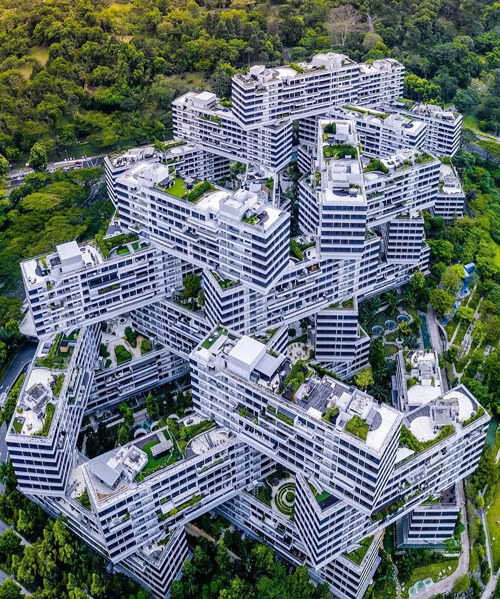
Architecture: Designed by OMA and Buro Ole Scheeren, The Interlace offers an alternative approach to the traditional vertical apartment block. It consists of 31 hexagonal blocks, which are stacked horizontally and vertically on top of each other to form a “megastructure”.
Community Driven Design: The Interlace offers a series of communal and green spaces to encourage interaction between residents. With interior courtyards, outdoor activity areas and swimming pools, the development stands out as a model of urban housing that promotes community living.
11. National Gallery Singapore: History and Art in Perfect Harmony

Architecture: The National Gallery is a conversion of Singapore’s former High Court and City Hall. Designed by studio Milou Architecture and CPG Consultants, the gallery is a blend of classical and modern architecture.
Design: The gallery creates modern exhibition spaces while remaining faithful to the original architecture of the historic buildings. The large glass ceiling, which allows light to pass through, emphasizes the historical elements of the building while providing natural lighting to the interior.
12. The Colonnade Condominiums: Postmodern Architecture in Singapore

Architecture: Designed by Paul Rudolph, The Colonnade is one of the most unique residential projects in Singapore. Built in a postmodern style, the structure features modular units of varying heights and balconies that extend outwards.
Innovation: The Colonnade offers flexible and customizable interiors, allowing residents to customize their living spaces. At the same time, the exterior design of the structure stands out in terms of both aesthetics and functionality.
Related Articles: What is Postmodern Architecture
13. Apple Marina Bay Sands: A Floating Iconic Building in Singapore
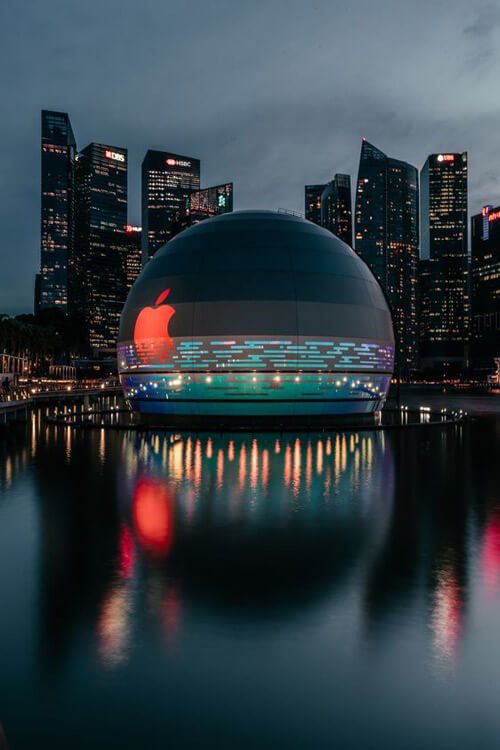
Architecture: Apple Marina Bay Sands, designed by Foster + Partners, is an iconic store located in Singapore’s Marina Bay district. The store stands out as a floating dome-shaped structure made entirely of glass.
Structural Innovation: Apple Marina Bay Sands features an interior surrounded by glass panels without any support structure. This innovative structure makes a significant contribution to Singapore’s modern architecture scene in terms of aesthetics and engineering.
Related Articles: What is Modern Architecture
14. Singapore Sports Hub: Multipurpose Sports Complex

Architecture: Designed by DP Architects and Arup Associates, Singapore Sports Hub is a multi-purpose complex that serves as Singapore’s sports, entertainment and lifestyle hub. The most striking element of the building is the National Stadium, which features a retractable roof system.
Environmental Sustainability: The building is equipped with water-saving systems, energy efficiency solutions and environmentally friendly materials. The complex meets the sports and entertainment needs of the masses, while demonstrating an environmentally sensitive design approach.
15. Punggol Waterway Terraces: Innovative Approach to Social Housing

Architecture: Designed by Surbana Jurong, Punggol Waterway Terraces brings an innovative approach to Singapore’s social housing projects. With its waterfront terraced layout, this development offers a life at one with nature.
Community-Oriented Design: The terraces are connected by wide walkways, playgrounds and green spaces, creating an environment that encourages community living. This project is a successful example of how modern social housing can be made more livable and aesthetic.
These iconic structures perfectly reflect how Singapore architecture combines innovation, environmental sensitivity and cultural richness. Architecture in Singapore is not only a visual art, but also a site of cultural and environmental interaction. These famous Singapore buildings are powerful icons that reflect the spirit and vision of the city for both local and international visitors.
What do you think of this city where modern urbanism blends with green? What other famous or iconic buildings in Singapore can we add to this list? Please share in the comments… 🙂
